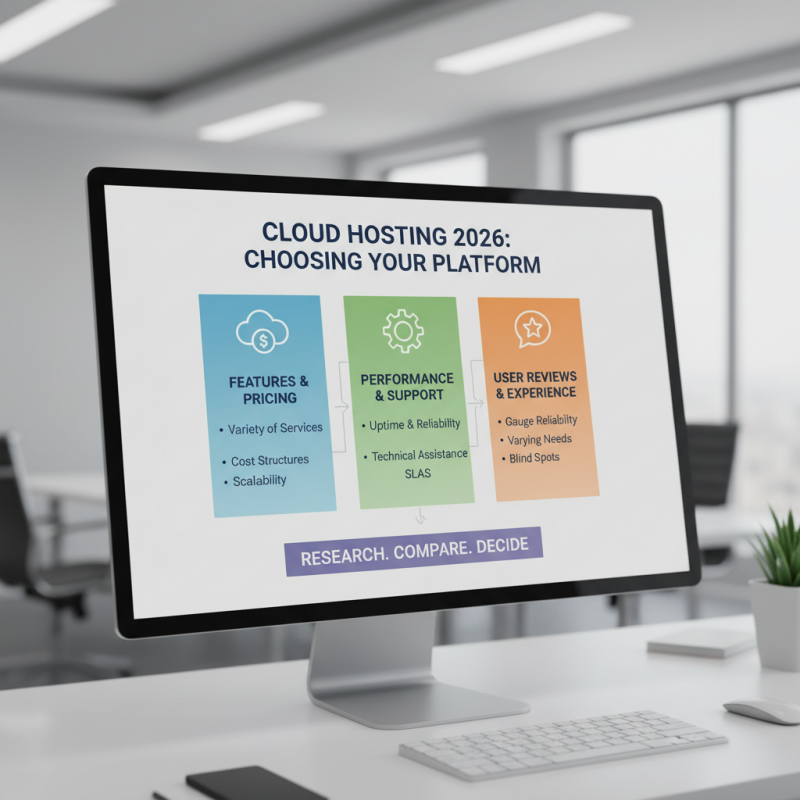
2026 Top Cloud Hosting Options What to Choose for Your Business?
In the rapidly evolving world of cloud hosting, businesses face critical choices. Industry expert Dr. Alice Johnson states, "Choosing the right cloud solution is key to your business's success." With so many options available, it can be overwhelming. Each solution has unique features and pricing models.
Cloud hosting enables scalability, flexibility, and cost-effectiveness. However, not all cloud services are created equal. Some may lack the support structures necessary for growth. Others might be too complex, leading to inefficient usage. Businesses need to reflect on their specific needs before making a decision.
Selecting a cloud hosting provider should be a thoughtful process. Factors like uptime, customer support, and security measures must be prioritized. To ensure long-term success, companies should evaluate their current infrastructure and future goals. Finding the right balance in cloud hosting can lead to transformative changes in operations.

Top Features to Consider When Choosing Cloud Hosting for Your Business
When selecting cloud hosting for your business, several key features deserve careful consideration. Performance is paramount. According to a recent study, 94% of users report that slow loading times directly impact their overall satisfaction. This statistic underscores the need for robust uptime guarantees and speedy content delivery networks. Look for hosting options that promise at least a 99.9% uptime.
Security also plays a critical role. With cyber threats on the rise, businesses need hosting services that offer advanced security protocols. The 2023 Cybersecurity Report highlighted that 60% of small businesses experienced a cyber attack in the last year. Therefore, options that include SSL certificates, DDoS protection, and regular backups can provide peace of mind.
Scalability is another essential feature. Companies often face fluctuations in traffic and resource needs. Research shows that over 70% of businesses plan to increase their cloud spending in the next 12 months. Flexible pricing models and scalable resources allow businesses to adjust as needed. However, be wary of hidden costs that might arise with scaling.
2026 Top Cloud Hosting Options: What to Choose for Your Business?
| Hosting Option |
Storage (GB) |
Bandwidth (GB) |
Backup Services |
Security Features |
Price ($/month) |
| Basic Cloud Hosting |
50 |
300 |
Weekly |
DDoS Protection |
15 |
| Advanced Cloud Hosting |
100 |
1000 |
Daily |
SSL, DDoS Protection |
30 |
| Premium Cloud Hosting |
250 |
Unlimited |
Real-Time |
Advanced Firewalls |
60 |
| Enterprise Cloud Hosting |
500 |
Unlimited |
Real-Time & On-Demand |
24/7 Monitoring |
120 |
Overview of Major Cloud Hosting Providers in 2026
In 2026, businesses face many cloud hosting options. It’s hard to choose the best one. Providers offer various features, prices, and levels of support. Understanding these can be overwhelming. Look for user reviews to gauge performance, but keep in mind that experiences vary. A hosting solution may excel in one area but fall short in another.
Some services focus on scalability, allowing businesses to grow without a hitch. Others emphasize security features, an essential aspect for any enterprise. Yet, many companies overlook this when selecting a provider. Don’t be swayed by flashy marketing. Instead, prioritize what your business truly needs. This reflection can save you from costly mistakes. Additionally, consider the user interface. Some platforms are intuitive, while others require a steep learning curve. Think about your team's technical skills and readiness for any transition.
Comparative Analysis: Public vs. Private vs. Hybrid Cloud Options
When choosing between public, private, and hybrid cloud options, businesses face unique challenges.
Public clouds are often cost-effective and scalable. They allow easy access to resources. However, businesses may worry about security and compliance.
Sensitive data might be at risk in these shared environments. This concern isn’t trivial. Organizations must think carefully about what data they want to host.
Private clouds offer dedicated resources. They provide better control and security.
Businesses can customize settings to fit their needs. But this option comes with a higher cost and requires more management.
It might not be the best fit for smaller organizations. They might struggle with the infrastructure demands.
Finding the right balance between cost and security is crucial.
Hybrid clouds present a compromise. They combine the scalability of public clouds with the security of private ones.
This gives businesses flexibility. They can make better decisions about where to store their data.
Yet, managing a hybrid environment can be complex. It requires careful planning and oversight.
Companies need to ensure seamless integration between different systems.
Cost Factors: Understanding Pricing Models in Cloud Hosting
When choosing a cloud hosting solution, understanding pricing models is crucial. Cloud hosting costs can vary significantly. Industry reports indicate that about 70% of businesses underestimate their monthly cloud expenses. This often leads to unexpected bills that strain budgets.
There are different pricing models. Pay-as-you-go is popular but can become expensive over time. Reserved instances provide lower rates, but they require long-term commitment. According to a recent study, organizations save an average of 30% with reserved instances compared to on-demand pricing. However, businesses must assess their needs carefully before committing.
**Tips:** Always track your cloud usage. This helps avoid surprise charges. Consider flexible pricing plans that adapt to your business growth. Review your cloud service provider’s billing model regularly. This ensures you are optimizing costs effectively. Evaluate and adjust as necessary; flexibility can lead to savings. Don’t forget to analyze your monthly bills for any anomalies.
Scalability and Performance: How to Meet Growing Business Demands
Scalability is crucial for modern businesses. As demands grow, ensuring your hosting solution can adapt is vital. You may face unexpected traffic spikes. A rigid hosting option can lead to slower performance and frustrated users. Consider a cloud solution that adjusts effortlessly as your needs change.
Performance is equally important. Customers expect fast load times and reliable uptime. A drop in performance can hurt your brand's reputation. You should routinely evaluate the speed and stability of your service. An underperforming platform can stifle your growth. A better approach is to test your hosting regularly and make necessary adjustments.
Investing in a flexible cloud solution offers control. You can fine-tune resources as needed. However, not all options are equal. It’s essential to weigh features against your business model. Take the time to research, test, and reflect on what truly meets your needs. Adjustments and changes should be part of your strategy to thrive in a competitive landscape.