Top 10 Free VPS Hosting Services to Boost Your Online Projects?
In today's digital landscape, having robust web hosting is vital for online success. With an increasing number of startups and small businesses, many are turning to "free VPS hosting" solutions. Recent reports indicate that nearly 43% of small businesses use virtual private servers (VPS) for their web hosting needs. The appeal of a free option can be tempting, especially for those with limited budgets.
However, while free VPS hosting can be advantageous, it often brings challenges. Users may face issues like limited resources or unreliable uptime. According to industry data, 70% of users find that free options may not meet their growing demands. Each project has unique needs. Understanding these limitations is crucial before making a decision.
Exploring free VPS hosting services could yield valuable insights. It allows users to experiment with different platforms without financial pressure. Nonetheless, it’s important to acknowledge that these services may not provide the same level of support or scalability as premium options. Balancing these factors is essential for any online project aiming for long-term success.

Top Features to Look for in Free VPS Hosting Services
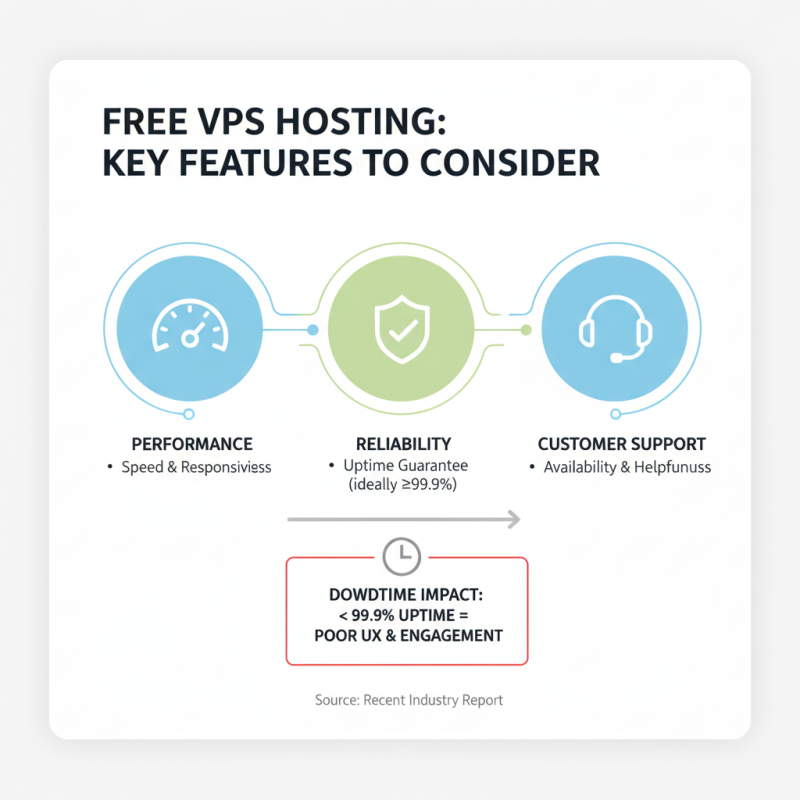
When considering free VPS hosting services, focus on key features. These include performance, reliability, and customer support. A reliable service often offers uptime guarantees. According to a recent industry report, uptime below 99.9% can lead to significant downtime. This can negatively impact user experience and engagement metrics.
Performance is another critical factor. Ensure that the free VPS can handle your projected traffic. Services that allocate sufficient RAM and CPU can significantly enhance speed and stability. Based on findings, 50% of users abandon sites that take longer than three seconds to load. Hence, speed matters.
**Tip:** Before choosing, test the service. Monitor performance for a few days to identify any deficiencies.
Security is often overlooked. Check if the provider includes essential features like firewalls and DDoS protection. A report from Cybersecurity Ventures states cybercrime is expected to cost businesses over $10 trillion annually by 2025. Ignoring security can lead to severe consequences.
**Tip:** Regularly assess security measures. Don’t assume that free means secure. Always stay updated on potential vulnerabilities.
Comparative Analysis of the Best Free VPS Hosting Providers
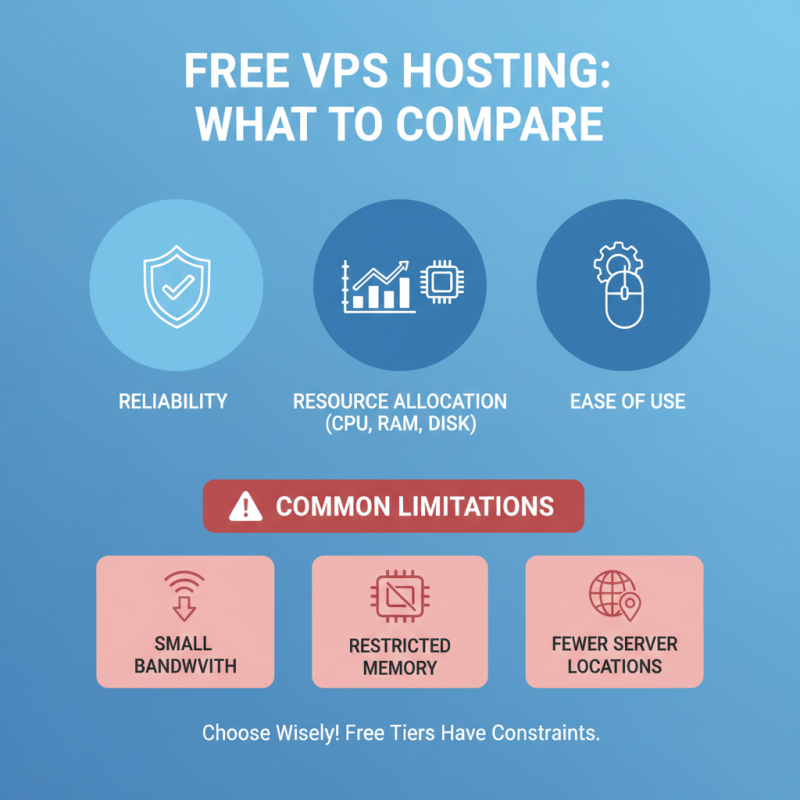
When exploring free VPS hosting services, it's essential to compare various features. These include reliability, resource allocation, and ease of use. Many free services come with limitations. Users might find small bandwidth, restricted memory, or fewer server locations.
Performance varies greatly among providers. Some may offer decent uptime, while others struggle. A slow server affects website loading times. This, in turn, impacts user experience and can deter visitors. Look for essential features like user support. Some free services lack this critical aspect, leaving users in the dark.
Upgrading to paid plans is common. Providers often entice users with appealing free options. However, hidden costs can emerge later. Users may need to navigate complex terms and conditions to understand these potential charges. Be cautious before committing to any provider. Always verify what is included in their free offerings.
Setting Up Your Free VPS: A Step-by-Step Guide
Setting up a free VPS can feel daunting. However, with the right guidance, it becomes manageable. Begin by choosing a reliable provider. Look for user-friendly interfaces. A good control panel will make configuration easier later on.
After signing up, access the VPS dashboard. Often, you’ll find various templates. Explore these options to find the best fit for your projects. It’s common to feel overwhelmed by all the features available.
Take your time here, as rushing may lead to mistakes.
Here’s a quick tip: Always back up your data. Free services can sometimes be unreliable. Save your configurations and important files externally. This way, you have peace of mind.
Additionally, remember to monitor your server’s performance. Free VPS services may have limitations. Look out for any latency issues. Reflect on your usage patterns to adjust your resources effectively.
It’s all part of the learning curve.
Common Limitations of Free VPS Hosting Services
Free VPS hosting services can be appealing for startups and small businesses. However, users should be aware of several common limitations. One significant drawback is the
resource allocation. Many free services offer limited CPU and RAM. A 2020 survey showed that nearly
70% of users faced performance issues due to these constraints. This can hinder project growth
and slow down websites, pushing users to consider paid options.
Another common limitation is security. Free VPS providers often lack essential security features. Data breaches
can occur more frequently in free environments. A report from Cybersecurity Ventures indicated that 60%
of small businesses close within six months of a cyberattack. Users may also encounter unreliable customer support. With limited resources available, timely help is often scarce.
Therefore, it is crucial to evaluate whether such options meet your operational needs before committing.
Additionally, some free VPS services impose restrictions on bandwidth and storage. Users might experience throttling
during peak times. Reports suggest that 55% of startups have abandoned a project due to hosting issues.
These factors underscore the importance of careful consideration when selecting free VPS services.
Tips for Optimizing Performance on Free VPS Solutions
When using free VPS hosting solutions, optimizing performance is crucial. Start by monitoring resource usage regularly. CPU and memory usage should be kept in check. Free VPS services may have limited resources, so knowing your limits helps prevent slowdowns. Utilize tools that provide insights into performance metrics. These steps will aid in maintaining a smooth operation.
Another aspect to consider is software choices. Lightweight applications can make a significant difference in speed. Avoid heavy frameworks that could bog down the system. When selecting your tech stack, consider your project's needs. Testing different configurations can be beneficial. If the initial setup doesn't perform well, don't hesitate to adjust.
Lastly, ensure security practices are in place. Free services might lack robust security measures. Implement basic tools like firewalls and regular updates. Neglecting these aspects can lead to vulnerabilities. Performance is important, but security cannot be overlooked. Balance is key in creating a reliable environment.
Top 10 Free VPS Hosting Services to Boost Your Online Projects - Tips for Optimizing Performance on Free VPS Solutions
| Service Provider |
CPU Cores |
RAM |
Storage |
Bandwidth |
Uptime Guarantee |
Customer Support |
| Provider A |
2 Cores |
1 GB |
20 GB SSD |
500 GB |
99.9% |
Email Support |
| Provider B |
1 Core |
512 MB |
10 GB HDD |
100 GB |
99.5% |
Community Support |
| Provider C |
4 Cores |
2 GB |
40 GB SSD |
1 TB |
99.8% |
Live Chat Support |
| Provider D |
2 Cores |
1 GB |
25 GB SSD |
300 GB |
99.7% |
24/7 Support |
| Provider E |
2 Cores |
2 GB |
30 GB SSD |
800 GB |
99.9% |
Email and Live Chat |
| Provider F |
1 Core |
1 GB |
15 GB HDD |
200 GB |
98.5% |
Community Forums |
| Provider G |
2 Cores |
1 GB |
20 GB SSD |
500 GB |
99.6% |
Email and Community Support |
| Provider H |
1 Core |
256 MB |
10 GB HDD |
100 GB |
99.2% |
Limited Support |
| Provider I |
4 Cores |
2 GB |
50 GB SSD |
1 TB |
99.9% |
24/7 Live Support |
| Provider J |
2 Cores |
1 GB |
20 GB SSD |
300 GB |
99.8% |
Email Support |